


.png)




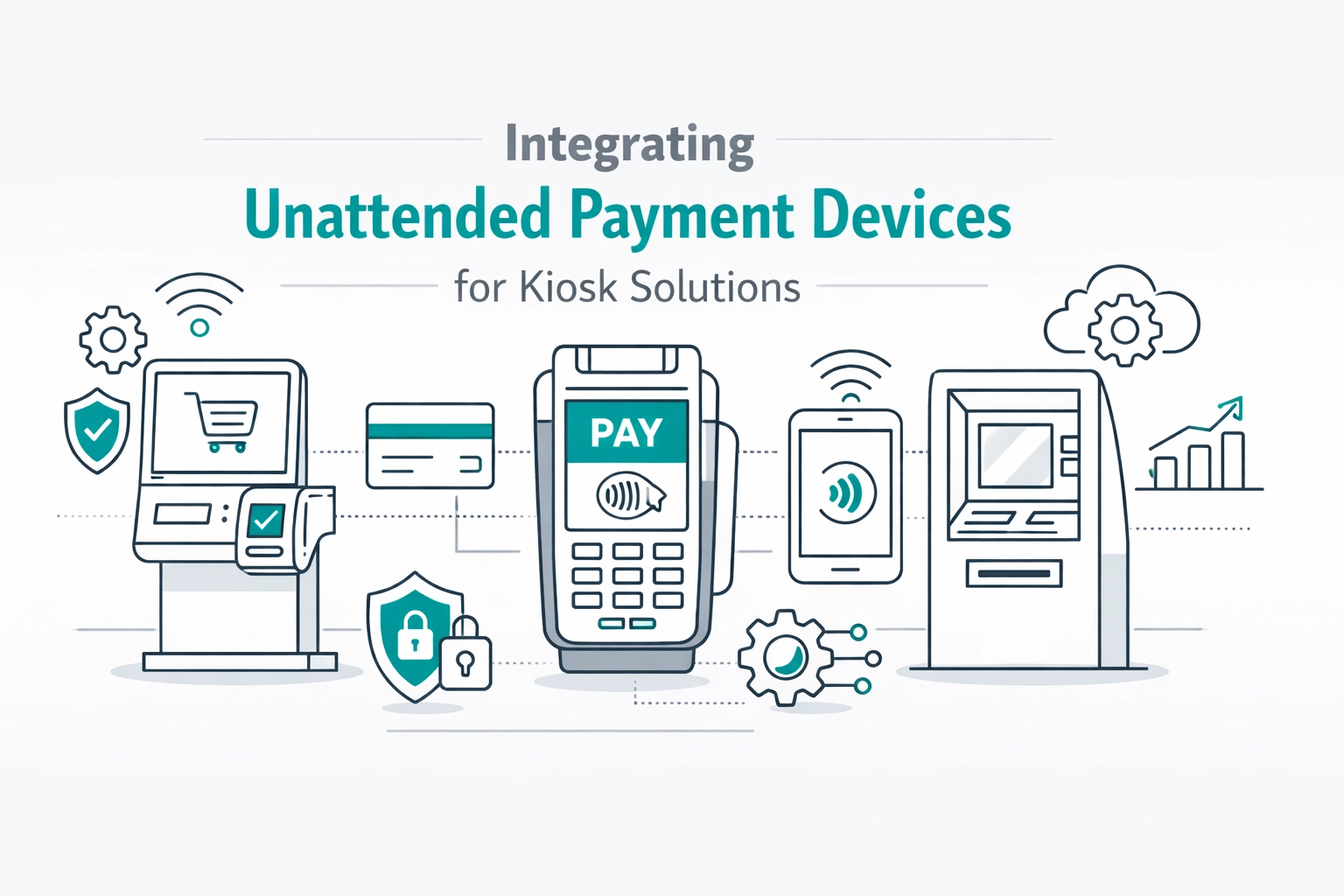
The demand for self-service technology is expanding across every vertical of the modern economy. From smart vending machines and automated car washes to parking meters and transit ticketing, businesses are prioritizing unattended solutions to reduce overhead and improve customer throughput. Implementing these systems requires a robust technical strategy that balances hardware durability with sophisticated software connectivity.
Integrate Payments provides the infrastructure necessary to bridge the gap between physical kiosk hardware and the digital financial network. By utilizing a high-performance payment platform integration, developers can deploy kiosks that process transactions autonomously, securely, and with minimal maintenance requirements.
The following technical overview outlines the critical components of unattended payment integration, focusing on hardware selection, architectural models, and upcoming regulatory shifts for 2026.
Choosing the right integration model is the most important decision in the kiosk development lifecycle. This choice dictates the complexity of your code, the scope of your PCI compliance, and the long-term flexibility of the solution.
In a fully integrated model, the kiosk software manages the entire transaction flow, including the handling of sensitive card data. While this allows for maximum customization of the user interface, it places the entire kiosk system within the scope of PCI DSS audits. This model is becoming less common due to the high security overhead and the risk of data breaches within the local environment.
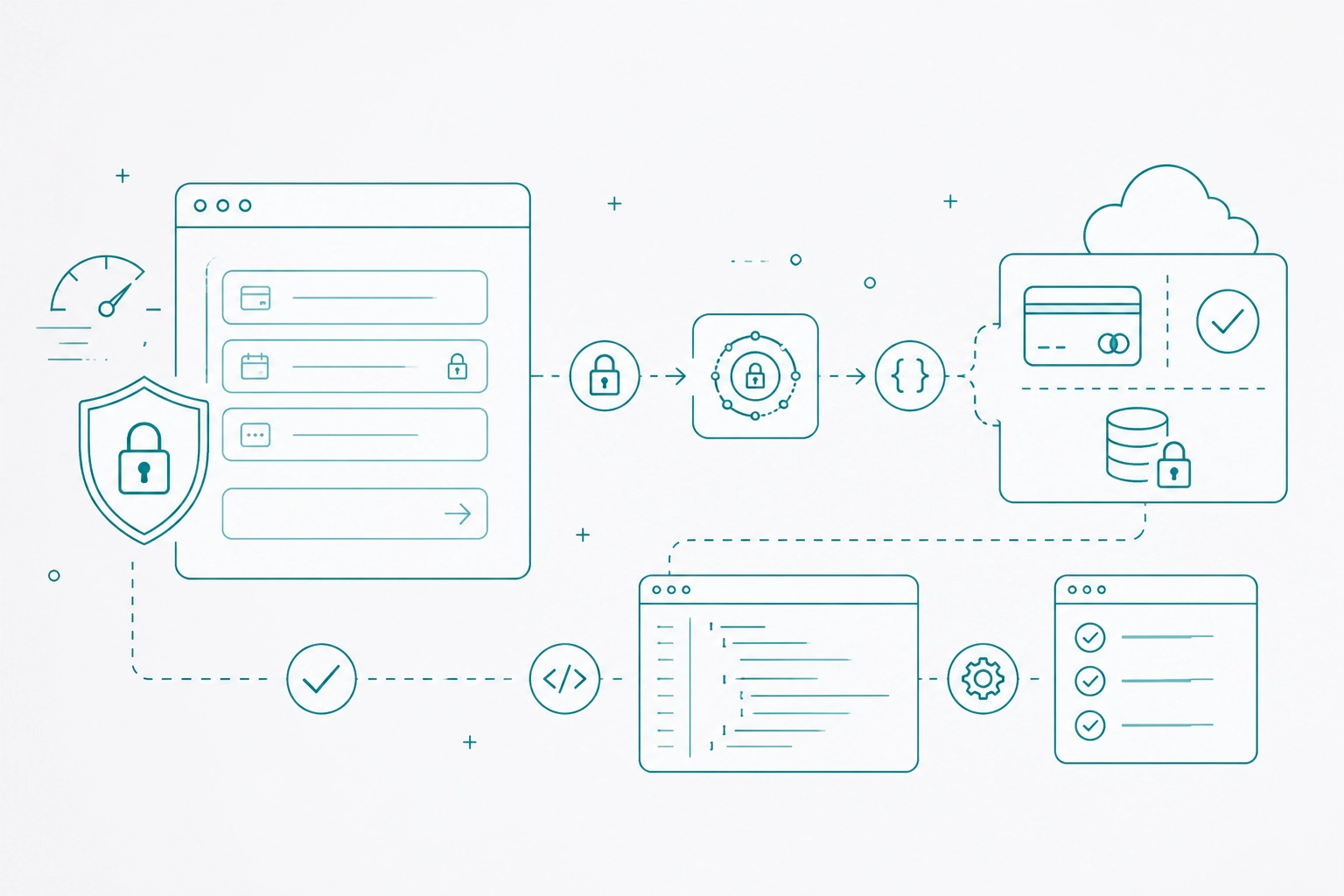
The semi-integrated model is the industry standard for modern unattended systems. In this configuration, the kiosk application sends a transaction request to the payment terminal via a local connection or API. The terminal handles the card reading, encryption, and communication with the host. The kiosk software only receives a non-sensitive response, such as an authorization code or a token. This drastically reduces the compliance burden and simplifies the payment gateway integration process for development teams.
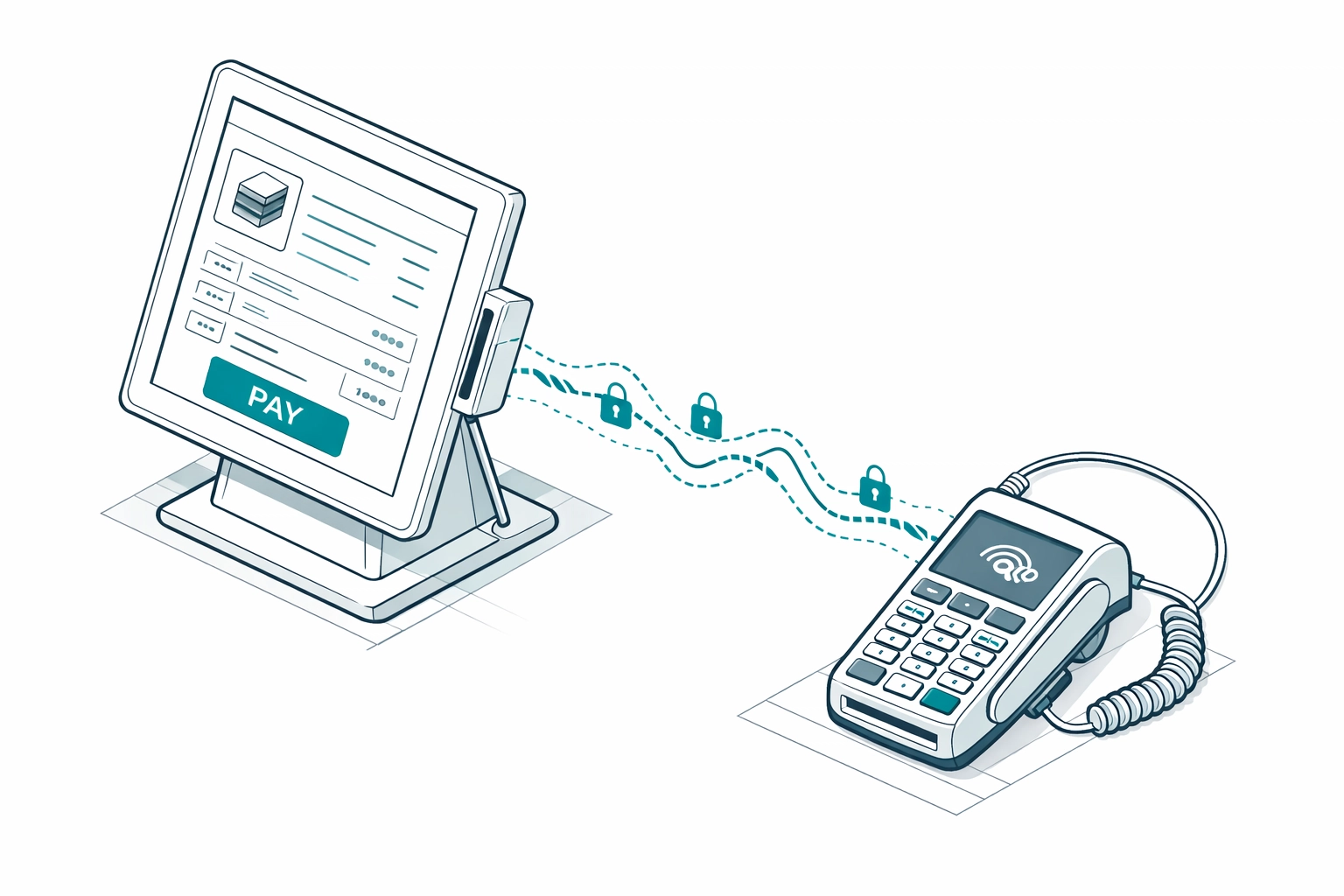
Unattended environments present unique challenges that standard retail terminals cannot handle. Devices must withstand extreme temperature fluctuations, moisture, dust, and physical vandalism. The hardware must be "ruggedized" to ensure 24/7 uptime in outdoor or high-traffic indoor settings.
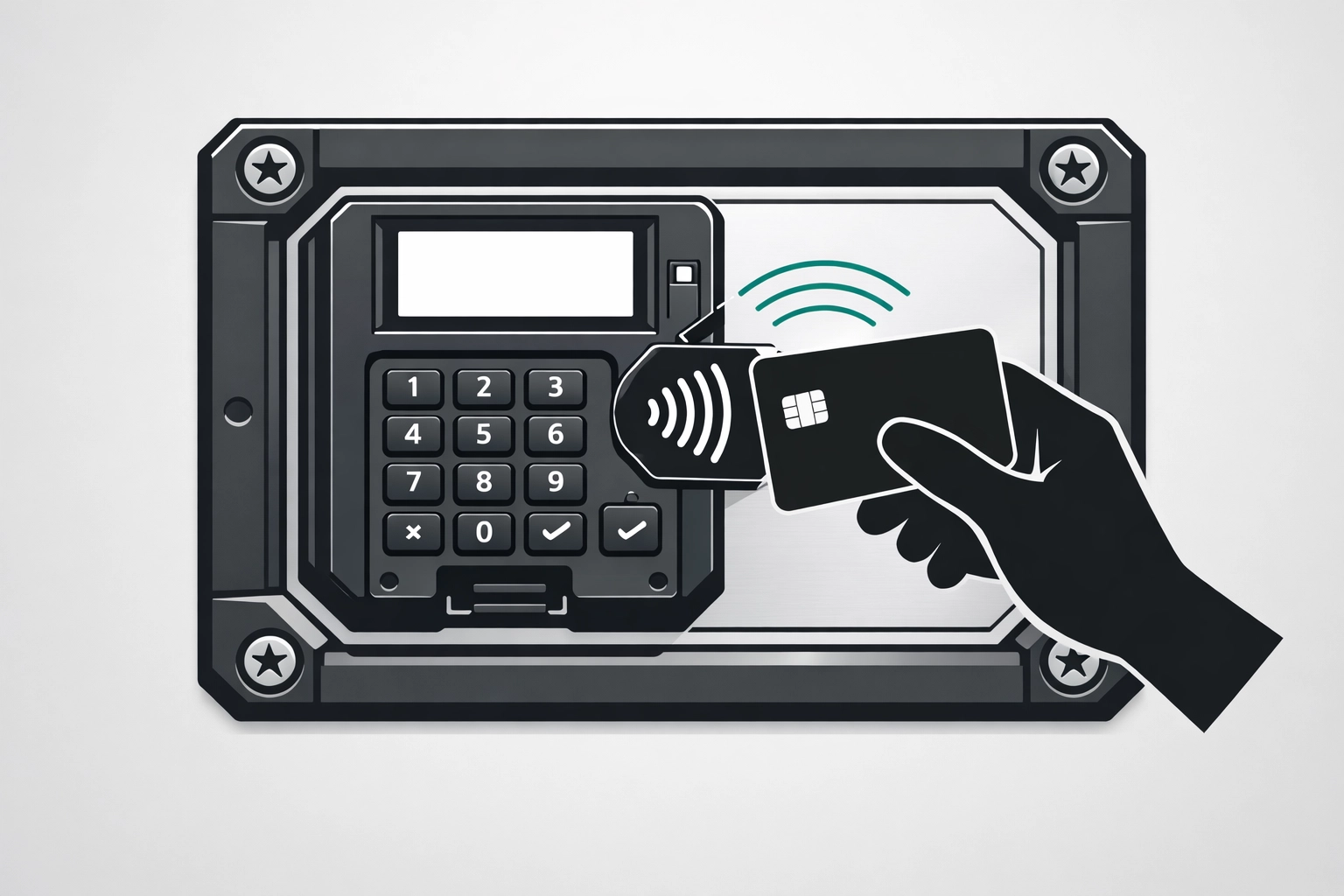
The Ingenico Self Series is the leading hardware choice for these applications. The Self/2000 and Self/4000 are designed for compact integration into vending and car wash panels, while the Self/5000 offers a full-color touchscreen for more interactive kiosk experiences. These devices are IK10 impact-resistant and IP65 waterproof, making them suitable for the harshest environments.
When selecting hardware, developers should look for terminals that support multiple connectivity options, including Ethernet, Wi-Fi, and 4G/LTE. For kiosks located in remote areas or parking lots, cellular connectivity ensures the terminal remains online even if local infrastructure fails. Integrating these devices through a secure payment gateway ensures that every transaction is encrypted at the point of interaction.
The shift toward Android-based kiosk software has simplified the development of interactive user interfaces. Android offers a flexible environment for building rich, app-like experiences on large touchscreens. However, managing hardware peripherals on Android requires a specialized approach.
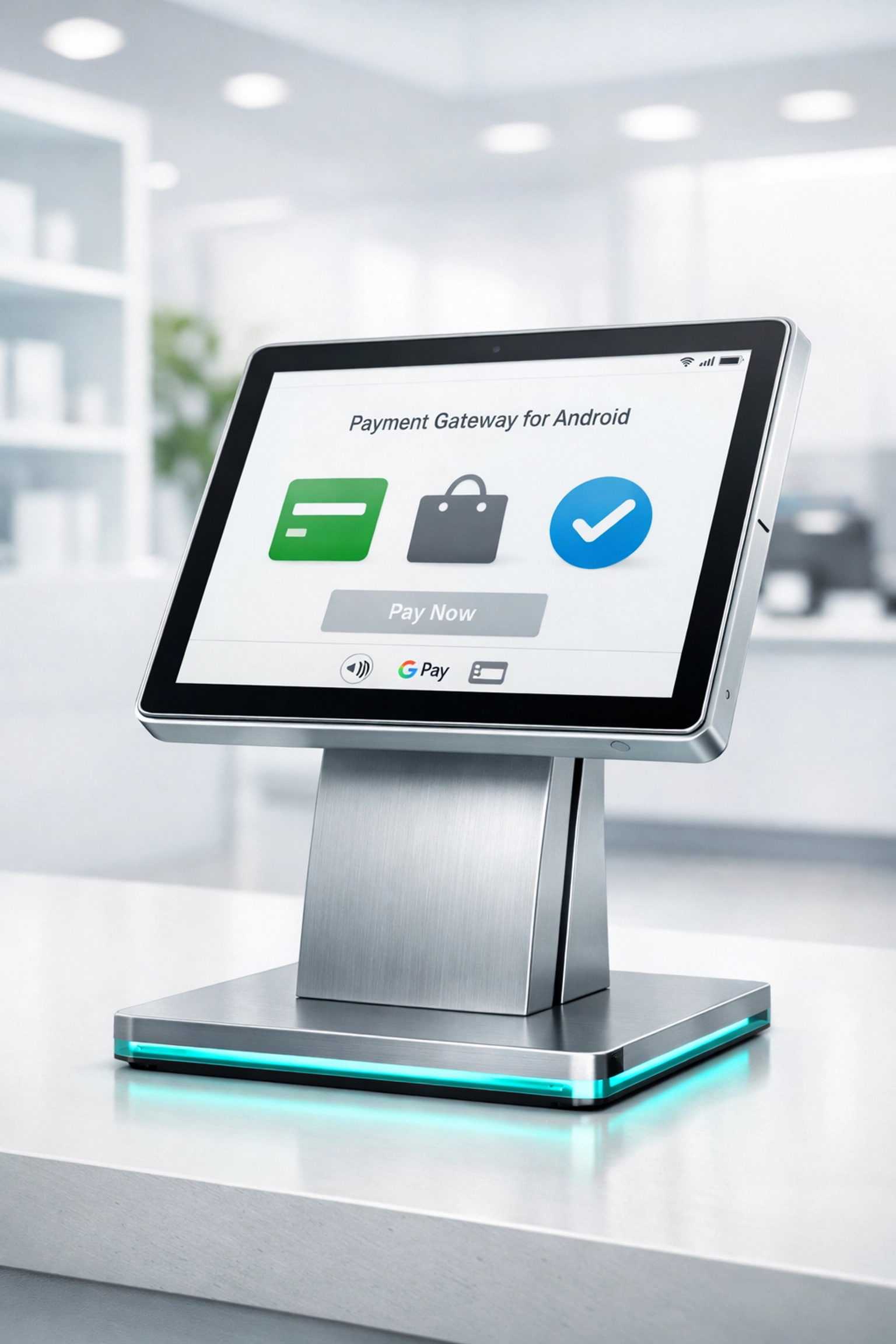
A payment gateway for android allows developers to use a dedicated SDK to communicate with the payment terminal. This setup is particularly effective for tablet-based kiosks used in fast-casual restaurants or retail checkouts. By leveraging an Android-native library, developers can trigger payments directly from their custom app and receive real-time status updates through callbacks.
This ecosystem also supports a "Store and Forward" capability, which is vital for unattended units. If a kiosk temporarily loses internet connectivity, the system can securely store encrypted transactions and upload them once the connection is restored, preventing lost sales during outages.
Transitioning to unattended payments offers significant economic advantages for businesses. The most immediate impact is the reduction in labor costs. A single employee can manage a fleet of dozens of kiosks, focusing on maintenance and restocking rather than manual transaction processing.
Scalability is another core benefit. Once the initial payment platform integration is completed and tested, deploying additional units is a matter of hardware installation and configuration. This allows businesses to expand their footprint into new locations without a linear increase in staffing requirements.
Furthermore, kiosks provide 24/7 uptime. Unlike human-operated registers, an unattended terminal is always available to process a sale. In sectors like electric vehicle (EV) charging or municipal parking, this round-the-clock availability is not just a convenience but a requirement for service viability.
As we approach 2026, the regulatory landscape for payments is tightening. The PCI Security Standards Council has introduced PCI PTS v6, which raises the bar for hardware security in unattended environments. Newer terminals are required to have enhanced physical security features to prevent skimming and tampering.
EMV standards are also evolving. Contactless adoption has reached a point where "Tap-to-Pay" is the preferred method for the majority of kiosk users. Ensuring your hardware supports the latest EMV kernel updates is essential for maintaining high authorization rates and avoiding liability for fraudulent transactions.
Integrating through Integrate Payments ensures that your system stays ahead of these changes. We manage the complexity of terminal management and security patches, allowing you to focus on the kiosk’s core functionality. Our documentation provides the necessary technical specs to ensure your hardware deployment meets all current and future compliance mandates.
The integration process begins in a controlled testing environment. Developers should never attempt to write payment code directly against a production environment. Accessing a developer sandbox payment gateway api sdk allows for the simulation of various transaction scenarios, including successful authorizations, declines, and communication timeouts.
During the integration phase, developers should focus on:
Using the provided documentation is critical for understanding the payload structures required for unattended devices. These payloads often differ from standard retail integrations due to the lack of a human operator to resolve errors on the fly.
Success in the unattended market requires more than just a working card reader; it requires a holistic approach to data management and remote monitoring. As your fleet grows, the ability to track terminal health and transaction volume from a centralized dashboard becomes indispensable.
Modern payment platforms allow for remote key injection and firmware updates. This means you can update your entire fleet of Ingenico terminals with the latest security protocols without sending a technician to every physical location. This remote management capability is the key to maintaining a profitable kiosk network.
For developers and business owners looking to modernize their self-service offerings, the path forward involves choosing ruggedized hardware, adopting a semi-integrated software architecture, and partnering with a provider that understands the nuances of unattended commerce.
To begin building your solution, visit our documentation for API references and integration guides. If you are ready to deploy, explore our secure payment gateway options to find the right fit for your specific kiosk environment.
Integrate Payments is committed to providing the tools and support necessary for the next generation of automated commerce. Whether you are building a single smart locker or a nationwide network of vending machines, our infrastructure is designed to scale with your ambition.