


.png)




Building a custom web application requires significant focus on architecture, user experience, and database integrity.
As your platform transitions from an initial MVP to a high-volume production environment, the payment infrastructure often becomes a primary bottleneck.
A rigid payment setup can lead to technical debt, security vulnerabilities, and expensive PCI compliance hurdles that stall growth.
Choosing a developer-focused integration strategy ensures that your application remains flexible, secure, and ready to scale.
Many developers make the mistake of hardcoding payment logic directly into the application core.
This approach works for a single gateway but creates massive complexity when you need to add new payment methods or move into international markets.
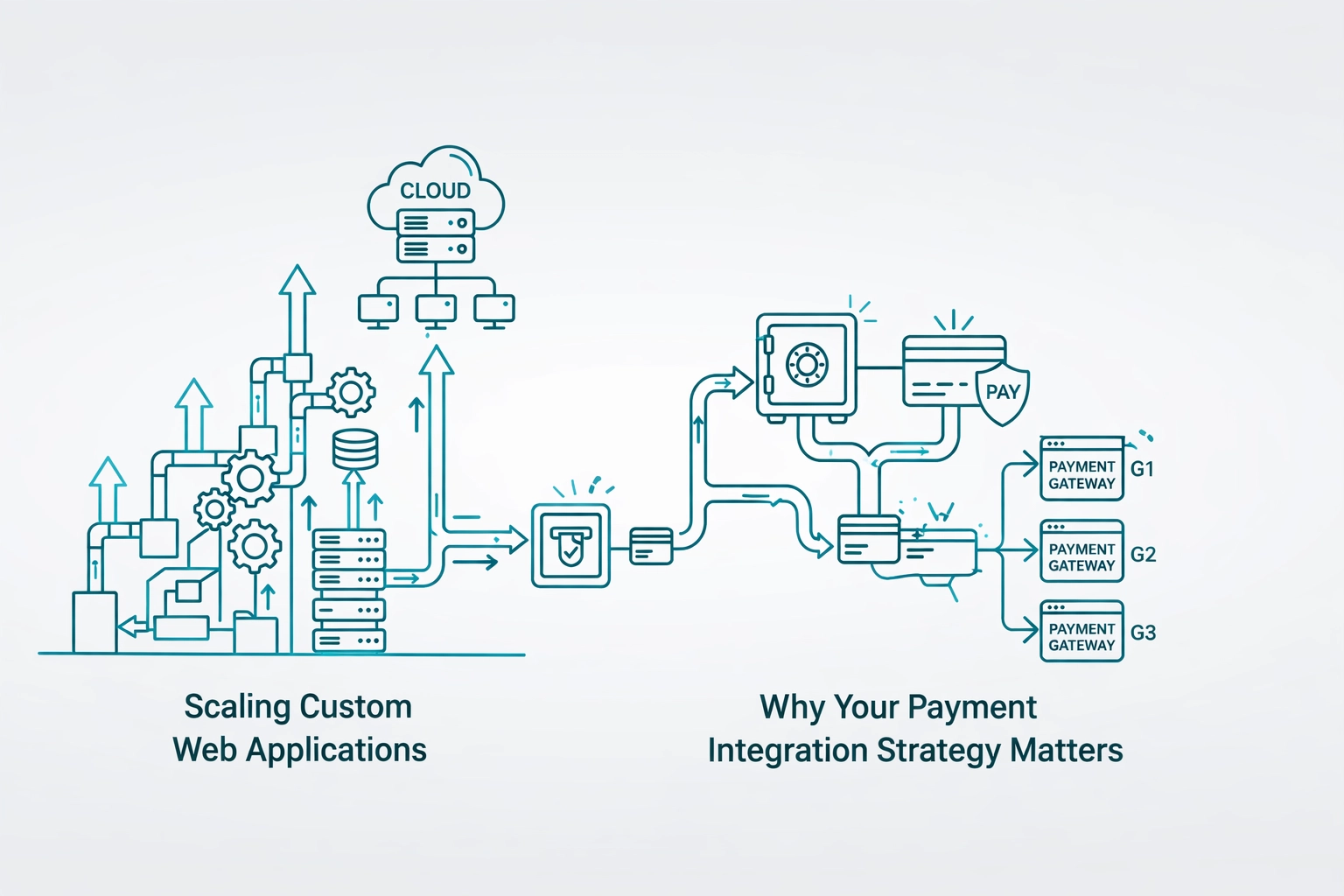
Architectural flexibility is the ceiling of your scalability. Use a modular, abstracted payment layer to isolate transaction logic from your business workflows.

By utilizing a robust payment processing for apps and marketplaces, you can swap or add providers without rewriting your entire checkout sequence.
This modularity allows your team to maintain a unified order model while supporting diverse payment rails behind the scenes.
Integrate Payments provides a gateway designed specifically for developers who value clean documentation and sandbox stability.
A developer-focused gateway offers RESTful APIs that use standard JSON payloads, making integration into custom stacks seamless.
Access to a comprehensive developer sandbox is essential for testing edge cases like expired cards, insufficient funds, and network timeouts.
Build your application logic around reliable webhooks to handle asynchronous payment notifications effectively.
This ensures that your database records for orders and subscriptions stay synchronized with the actual transaction status in real-time.
Security is not just a feature; it is a regulatory requirement that grows in complexity as your transaction volume increases.
Scaling a custom web application often forces developers into the crosshairs of strict PCI DSS (Payment Card Industry Data Security Standard) audits.
If your servers touch raw credit card data, you are subject to the most intensive compliance levels, which require hundreds of security controls.
Integrate Payments simplifies this by providing hosted fields and tokenization services that keep sensitive data off your infrastructure.
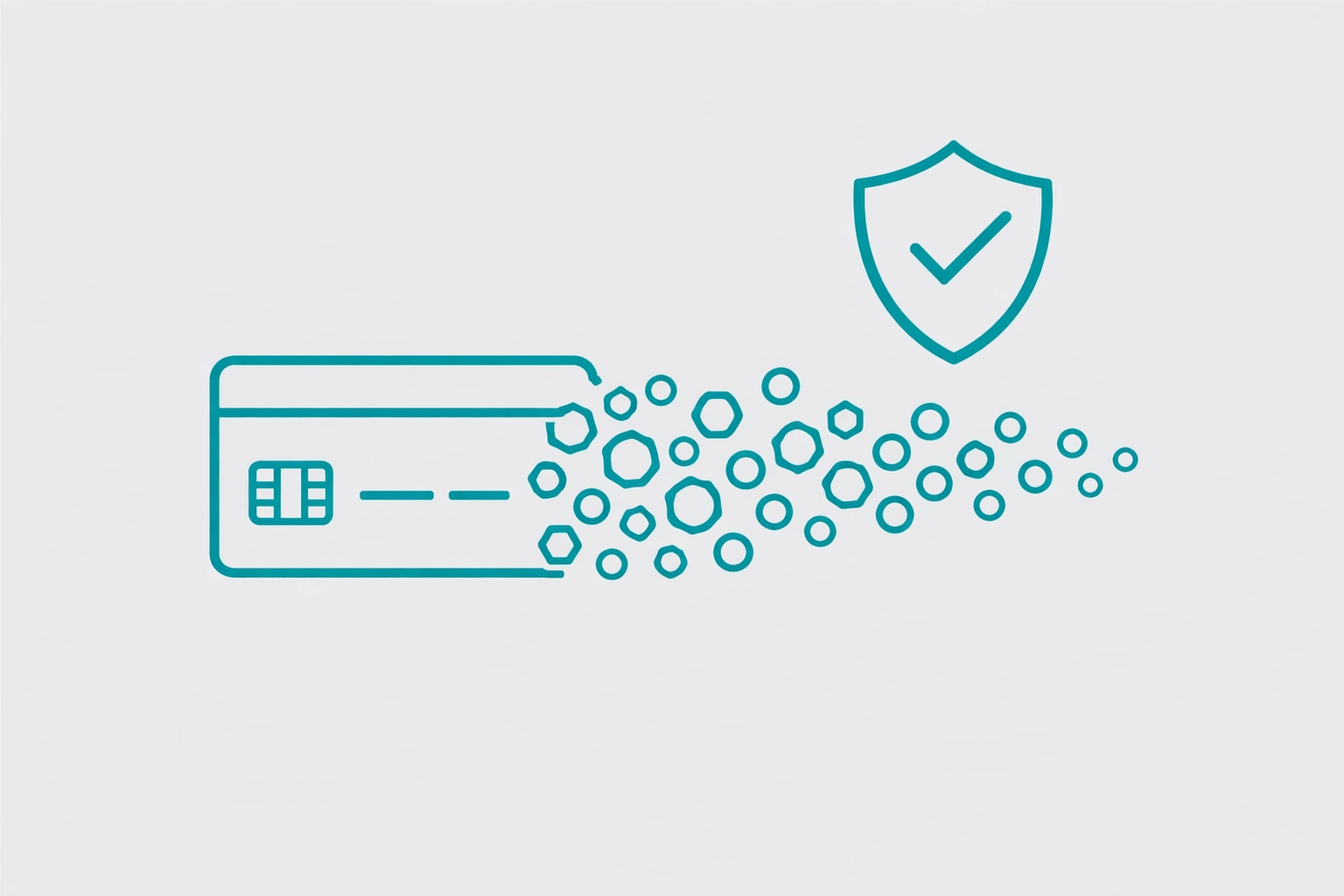
By using secure tokens, your application can perform recurring billing and 1-click checkouts without ever storing a primary account number (PAN).
This approach allows your business to qualify for the simplified PCI compliance SAQ, drastically reducing the administrative burden.
User experience directly correlates with conversion rates, and a custom web application must provide a frictionless checkout.
Minimize the number of steps required to complete a purchase by integrating native payment components that match your site's branding.

A professional website shopping cart integration should feel like a part of your application, not a third-party redirection.
Use client-side libraries to validate card details before they are even submitted to the server, reducing error rates and user frustration.
Providing a fast, responsive interface ensures that as your traffic scales, your conversion percentage stays high.
Custom SaaS and subscription platforms require advanced logic for billing cycles, prorations, and dunning management.
Manually calculating these variables is prone to error and difficult to audit as your user base grows into the thousands.
Integrate Payments offers built-in tools for automated scheduled billing.
This functionality helps developers focus on core product features instead of rebuilding subscription logic.
Leveraging existing tools for secure credit card info storage allows your application to handle renewals and upgrades effortlessly.
As your application scales, managing the state of multiple transactions across different providers becomes a significant technical challenge.
Without a unified status model, your support team will struggle to identify why specific orders failed or where funds are currently held.
A centralized gateway API provides a single source of truth for all transaction data, regardless of the payment method used.
Implement robust logging and monitoring for your webhook endpoints to ensure no transaction update is ever missed due to server downtime.
Standardizing your response handling ensures that your application can scale horizontally without creating data inconsistencies.
Choosing a quick, non-scalable payment integration today creates a "payment debt" that must be paid back later with interest.
Rewriting a payment system in a live production environment is one of the most high-risk tasks a developer can perform.
It requires complex data migrations of sensitive customer tokens and extensive testing to ensure no revenue is lost during the transition.
Avoid the rewrite by selecting a partner that offers a versatile payment gateway processor from day one.
Starting with a scalable foundation allows your team to ship new features faster rather than constantly fixing broken integration logic.
Custom web applications are often just the first step in a larger ecosystem that may eventually include mobile apps or physical retail locations.
Your payment strategy should account for this multi-channel future.
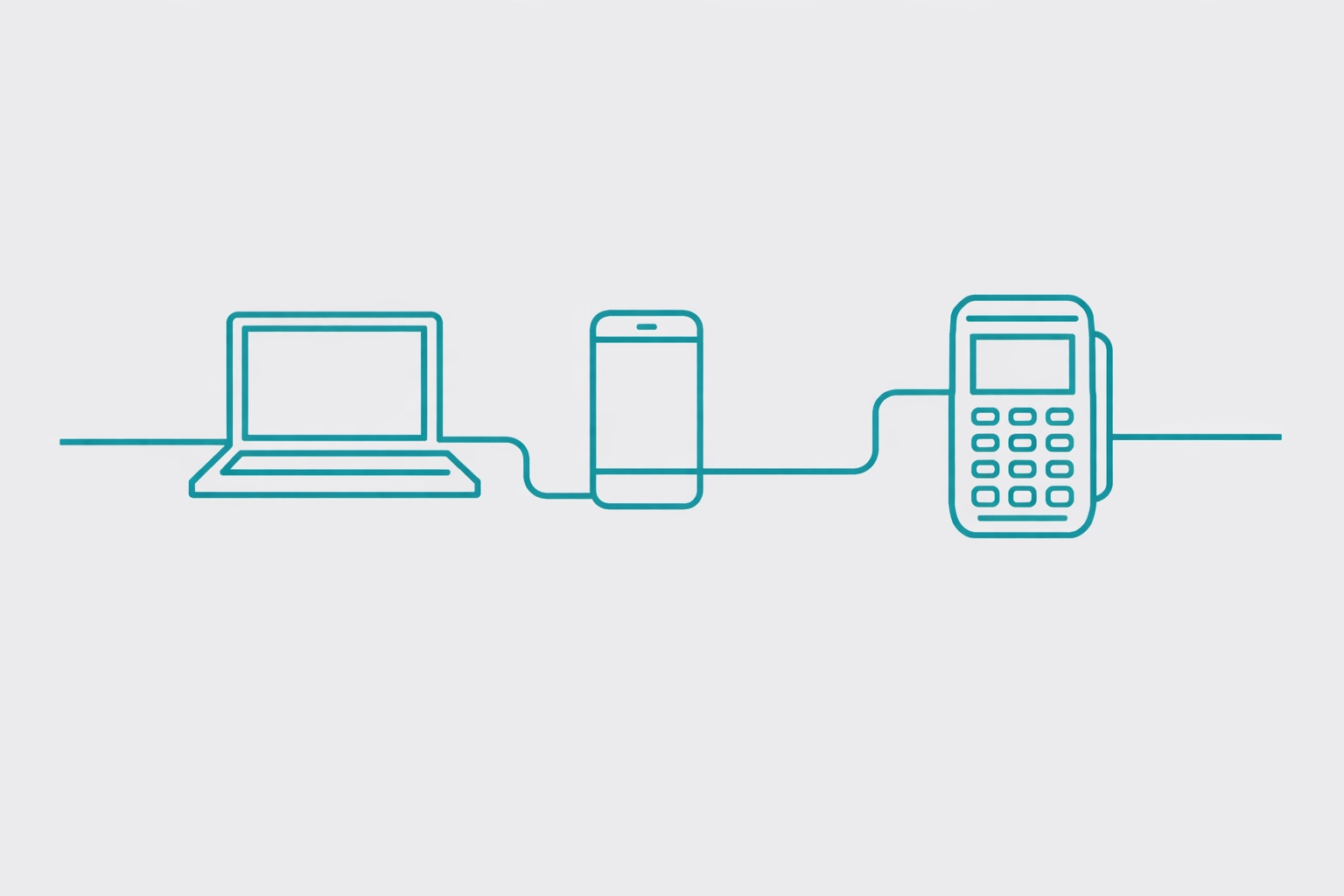
Using a provider that supports point of sale terminal systems alongside web APIs provides a unified view of your business.
This omni-channel approach allows for cross-channel features, such as "buy online, return in-store," which are highly valued by modern consumers.
Integrate Payments provides the flexibility to expand your reach across all platforms using a single merchant account.
Scalability in custom web applications is achieved through deliberate architectural choices and strategic partnerships.
By prioritizing a developer-first integration strategy, you protect your platform from security risks and technical obsolescence.
Integrate Payments offers the tools, documentation, and support needed to build a scalable eCommerce application.
Focus on building your product while the payment infrastructure handles transaction complexity.
Get started by exploring our developer documentation and setting up your sandbox environment.